The Metal Matters: Gold vs Platinum vs White Gold for Daily Wear
Most people choose a ring metal by color first: yellow, white, or rose. That is understandable, but color is only the surface. Your metal choice also determines long-term durability, maintenance needs, how the ring feels on your finger, and how often you will need servicing. If you wear your ring daily, these details matter more than trends.
This guide gives you a practical framework to decide between gold, platinum, and white gold. You will learn how karat purity changes performance, why nickel sensitivity is still a real issue, how metal hardness differs from toughness, and which option is best for pavé settings, active lifestyles, and long-term value.
If you want a ring that still looks and feels right ten years from now, start with metal strategy, not just metal color.
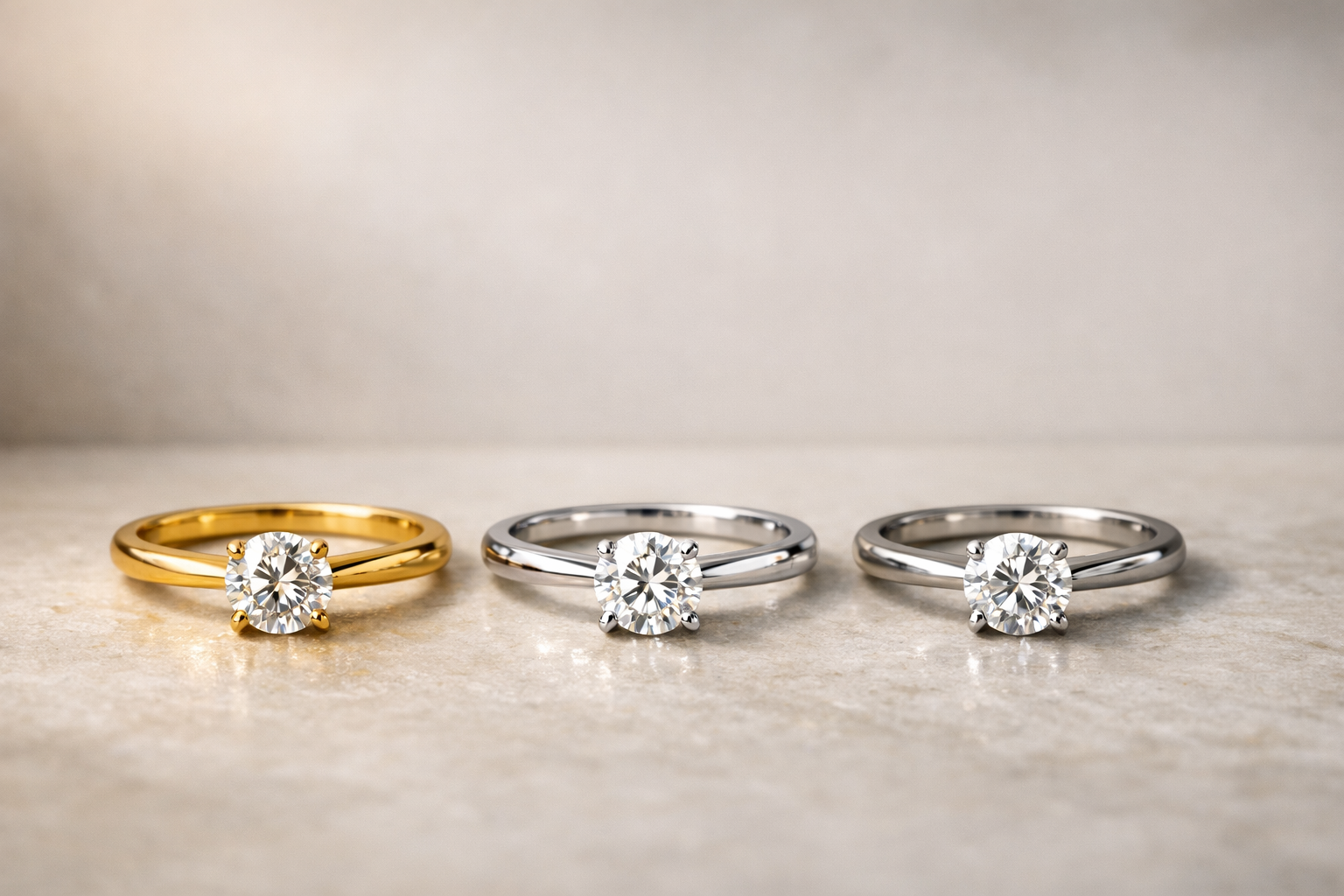
Gold, white gold, and platinum can look similar at a glance, but they age and maintain differently.
Quick Takeaways
Platinum is typically best for heavy daily wear, secure stone seating, and long-term structural integrity.
18k gold offers rich color and luxury feel, but is softer than 14k and may show wear sooner in high-contact designs.
14k gold is often the best durability-to-price balance for active lifestyles.
White gold needs rhodium re-plating over time; this is normal maintenance, not a defect.
If you have sensitive skin, verify alloys and ask for nickel-free metals before purchase.
For pavé or thin bands, choose metals and dimensions together. Design geometry often matters more than metal marketing.
Next step: pair metal choice with stone choice. If you are comparing durability and sparkle tradeoffs, read
Choosing the Right Stone: Diamonds, Moissanite, and Lab Diamonds
for a complete materials decision.
Start with the three metal truths most buyers miss
Truth 1: Purity is not the same as durability. A higher precious metal content sounds better, but more pure alloys can be softer. That means 18k gold (75% gold) is generally softer than 14k gold (58.5% gold), even though 18k is more expensive.
Truth 2: Hardness and toughness are different. Hardness is resistance to scratching and denting. Toughness is resistance to cracking or snapping. A metal can resist scratches yet still be less forgiving under certain impact profiles. For ring engineering, jewelers care about both.
Truth 3: Maintenance is part of ownership. No ring metal is maintenance-free. Platinum develops a patina. White gold needs rhodium refreshes. Gold prongs can thin over years. The right question is not “Which metal never changes?” but “Which maintenance pattern fits my lifestyle and expectations?”
Gold alloys explained: 10k, 14k, and 18k in real life
Gold used in jewelry is an alloy. Pure 24k gold is too soft for most engagement ring structures, so it is mixed with other metals for strength and color tuning.
10k gold (41.7% gold)
Most durable among common gold karats, but lower gold content means less saturated color and a less “luxury” feel to some buyers. Useful for high-abrasion wearers and tighter budgets.
Unique insight: 10k can be a strategic choice for people who work with their hands, but it may not match expectations if your priority is warm, rich yellow tone.
14k gold (58.5% gold)
The most common choice in North America because it balances color, durability, and price. In many studios, 14k is considered the “daily wear default,” especially for slim bands, pavé designs, and rings exposed to frequent contact.
Unique insight: if you are torn between 14k and 18k, compare your ring architecture first. For a sturdy solitaire shank, 18k can perform beautifully. For micro-pavé with delicate prongs, 14k often keeps details tighter for longer.
18k gold (75% gold)
Richer color and premium positioning, with a softer wear profile than 14k. A favorite for buyers prioritizing deep yellow warmth or overall luxury feel.
Unique insight: 18k is not “too soft” by default. It simply asks for a design that respects its behavior: adequate band thickness, well-built shoulders, and periodic prong checks.
Platinum: what you gain, what you trade off
Platinum is usually 95% pure in fine jewelry (often marked 950Pt). It is dense, naturally white, and hypoallergenic in most common alloys. Unlike white gold, platinum does not rely on rhodium plating to appear white.
Major advantages: excellent long-term structural reliability, strong stone security when properly built, naturally white color, and no re-plating cycle.
Tradeoffs: higher upfront cost, more weight on the finger, and visible patina development over time. Some people love that soft antique-like glow; others prefer frequent polishing for a brighter look.
Unique insight: platinum does not “wear away” in the same pattern as many gold alloys. It tends to displace rather than lose volume under surface abrasion, which can make it favorable for long-term prong integrity in high-value center stones.
White gold vs platinum: the comparison buyers actually need
Both can look similar in-store, especially under bright showroom lighting. The differences become obvious after 6–24 months of wear.
| Factor | White Gold | Platinum |
|---|---|---|
| Color maintenance | Needs rhodium re-plating periodically | Naturally white; no plating required |
| Upfront cost | Lower | Higher |
| Weight | Lighter | Heavier, denser feel |
| Skin sensitivity risk | Depends on alloy; verify nickel-free | Generally low in standard alloys |
| Long-term patina/wear look | Can yellow slightly as plating wears | Soft gray patina develops |
Decision shortcut: choose white gold if you prefer lower entry cost and do not mind maintenance appointments. Choose platinum if you want naturally white metal and stronger long-term structural confidence.
Nickel-free and sensitive skin: questions to ask before you pay
Skin reactions are often caused by alloy metals, not by gold itself. If you have eczema, known nickel sensitivity, or frequent irritation from jewelry, treat alloy disclosure as non-negotiable.
Ask your jeweler:
- Is this alloy nickel-free? Can you confirm in writing on the invoice?
- What exact alloy family is used (nickel white gold vs palladium white gold)?
- Are solder joints and resizing materials matched to the same hypoallergenic standard?
Unique insight: many buyers confirm the primary ring alloy but forget future service work. If resizing or repair is done with incompatible solder, irritation can return later even if the original ring was fine.
Design context matters: metal choice by ring type
Solitaire rings
Solitaires concentrate stress at the head and shoulder transition. Platinum and 14k are both excellent depending on setting geometry. If you want minimal maintenance and top stone security, platinum is often preferred.
Pavé and micro-pavé rings
Tiny stones demand precise bead work and consistent structural support. 14k white gold performs well in many pavé builds due to firmness and manageable service behavior. Platinum pavé can be gorgeous but requires high-level bench skill to execute and maintain correctly.
Vintage-inspired styles
If you love filigree and fine milgrain, discuss service strategy upfront. Delicate decorative features can soften over decades in any metal. Your jeweler’s build thickness and finishing standards matter more than brand labels.
Active-lifestyle daily wear
For gym, travel, childcare, and hands-on work, prioritize robust geometry: band width, shoulder thickness, low snag profile, and protective settings. Then choose metal. In practice, a well-built 14k ring can outperform a poorly designed platinum ring.
If you are still in concept stage, start with
How to Design Your Dream Engagement Ring (Without the Stress)
and
Engagement Ring Anatomy: Parts, Settings & Pro Tips
to align design and engineering from day one.
Cost over time: upfront price vs lifecycle maintenance
Buyers often compare only checkout price, but metal ownership includes maintenance spend over years. A practical comparison should include polishing, re-plating, prong retipping, and potential resizing complexity.
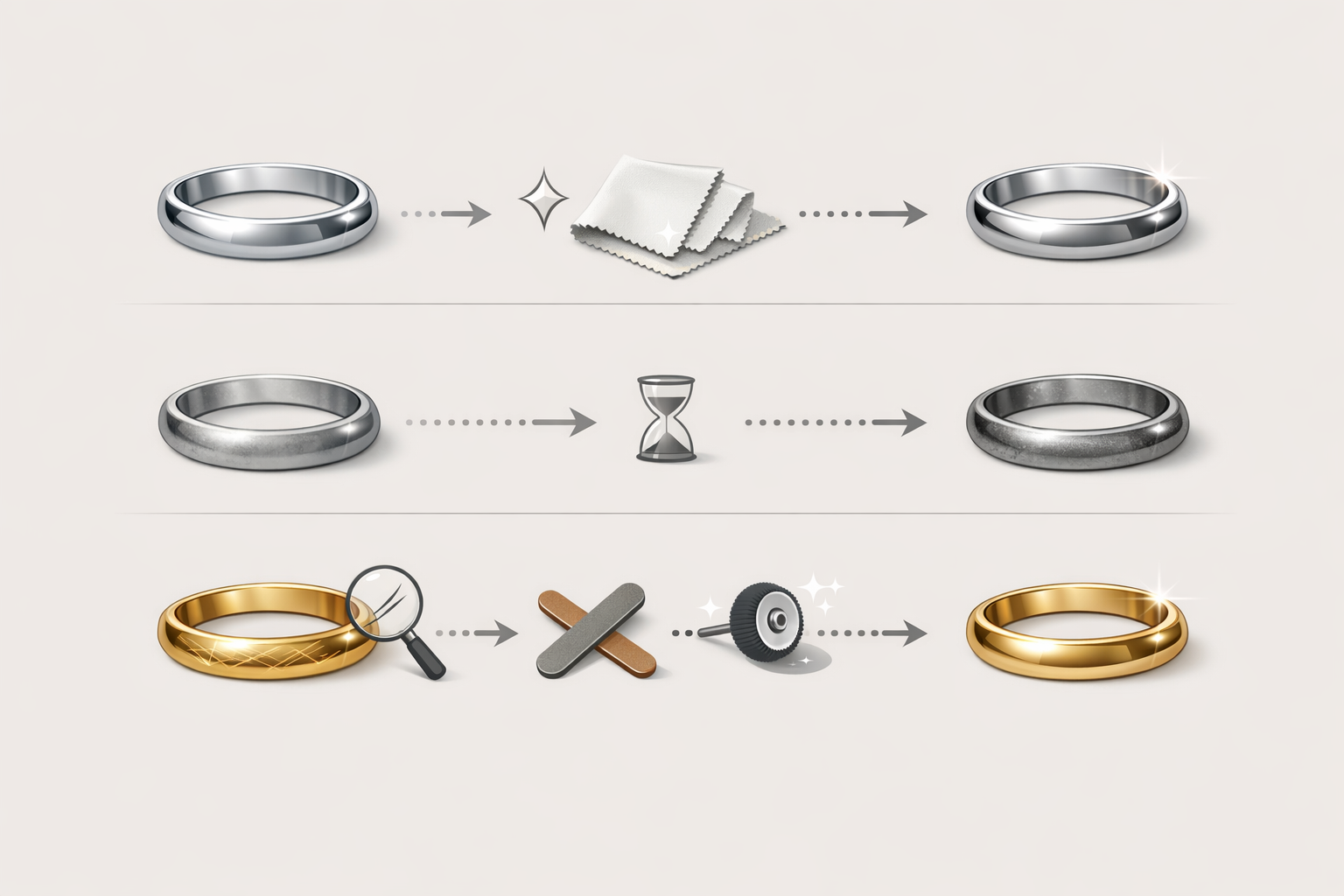
Think in maintenance cycles: white gold (re-plate), platinum (patina/polish), yellow or rose gold (scratch/polish).
White gold lifecycle profile: lower initial cost, periodic rhodium costs, potential color shift between appointments.
Platinum lifecycle profile: higher initial cost, less color maintenance, occasional polishing/patina management.
Yellow/rose gold lifecycle profile: no rhodium cycle, visible scratches with daily wear, periodic polishing and prong inspection.
Unique insight: if your location has limited access to high-quality bench jewelers, favor the metal that requires the fewest specialized recurring services. Convenience is part of true cost.
Real-world mini cases
Case 1: “I want bright white metal, low fuss, and daily wear confidence.”
Profile: commuter, frequent handwashing, occasional gym wear, 1.2 ct center stone. Recommendation: platinum solitaire with medium-height basket and reinforced shoulders. Why: naturally white color, no re-plating cycle, strong long-term structural behavior.
Case 2: “I love warm yellow tone and want heritage feel.”
Profile: style-first buyer, values rich color, prefers classic profiles. Recommendation: 18k yellow gold with durable shank dimensions and annual prong checks. Why: deeper yellow saturation and premium tactile feel with manageable care.
Case 3: “I need strongest value and practical everyday durability.”
Profile: active lifestyle, budget-aware, interested in pavé accents. Recommendation: 14k white or yellow gold depending on color preference, with design emphasis on structural thickness and protected stone edges. Why: excellent durability-to-price balance and broad serviceability.
Metal selection checklist before ordering
- Confirm alloy and karat in writing (not just verbally).
- Ask if metal choice changes recommended band width or head architecture.
- Get maintenance cadence: polishing, plating, inspections, expected intervals.
- Ask whether future resizing has constraints for your specific design.
- Verify skin-safety assumptions (especially nickel-free requirements).
- Compare lifecycle cost, not just day-one invoice price.
- Decide whether you prefer bright mirror finish or lived-in patina over time.
Then compare this with your stone choice in
Choosing the Right Stone: Diamonds, Moissanite, and Lab Diamonds
and your setting in
Engagement Ring Anatomy: Parts, Settings & Pro Tips
.
FAQs
Is platinum always better than gold for engagement rings?
Not always. Platinum is often superior for naturally white color and long-term structure, but 14k and 18k gold can be excellent when matched to the right design and lifestyle.
Does white gold turn yellow?
White gold can appear warmer over time as rhodium plating wears. This is expected and fixed with periodic re-plating.
Is 18k too soft for everyday wear?
Not inherently. 18k can handle daily wear when the ring is engineered well and maintained properly. Very delicate designs may benefit from 14k or platinum depending on details.
What is the best hypoallergenic ring metal?
Platinum is a common first recommendation for sensitive skin. For gold, request nickel-free alloys and confirm service materials follow the same standard.
Which metal scratches less?
Surface scratching behavior differs by alloy and finish. All ring metals scratch eventually. Focus on structural durability, maintenance routine, and your preference for polished vs patina appearance.
Browse rings by metal
See real designs in each metal from independent jewelers:
Conclusion: choose metal by lifestyle, not marketing
The best ring metal is the one that matches your life, your maintenance tolerance, and your design priorities. If you want naturally white color and strong long-term structural confidence, platinum is often the strongest answer. If you want excellent durability with better upfront value, 14k gold remains a smart default. If rich color and premium feel are your priority, 18k can be exceptional when paired with the right architecture.
What matters most is alignment: metal + design geometry + stone type + care plan. Make those decisions together, and you avoid the common regret cycle of aesthetic-first choices that clash with real-world wear.
If you are narrowing options now, shortlist two metal paths and ask your jeweler to show both in equivalent ring proportions. Side-by-side comparison with your actual design is the fastest way to make a confident final choice.
Ready for the next step? Use Rinderr to compare trusted jewelers, discuss alloy preferences, and request quotes that include clear metal specs from day one.